If you're planning to see glow worms in New Zealand, you'll quickly realise there are several different places to experience them. But while the glow worms themselves are the same species - Arachnocampa luminosa - the experience can be completely different depending on where you go.
Some glow worm locations are famous commercial caves with walkways and boat tours. Others are muddy, self-guided adventures where you're exploring in the dark with a headlamp. Wherever you see them, glow worms are incredibly beautiful, but the way you experience them can vary a lot.
I guide glow worm tours on the lakes in Rotorua, and I’ve also visited many of the well-known glow worm spots across New Zealand. So this is my honest comparison of what makes each place magical - from free local caves to guided glow worm tours.
Glow worm locations covered in this guide (ordered North to South):
Kawiti Caves (Bay of Islands)
Abbey Caves (Whangārei)
Waipu Caves (Northland)
Waitomo Glowworm Caves (Waikato)
Taiao Adventures Glow Worm Kayak Tour (Rotorua)
Te Anau Glowworm Caves (Fiordland)
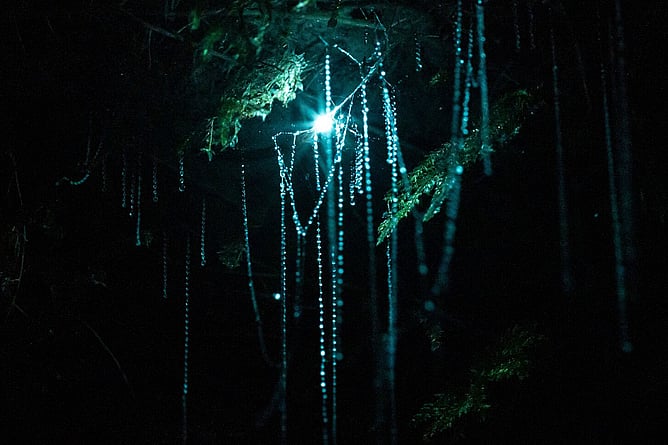
Kawiti Caves, Bay of Islands (North Island)
Kawiti Caves - Guided Tour
These glow worm caves are located in the Waiomio Valley near Kawakawa in the Bay of Islands. Unlike many larger attractions, the caves are still owned and operated by the Kawiti whānau, who have been guiding visitors here since the 1950s. The tours were first started by Te Tawai Kawiti, a descendant of the Māori chief Kawiti, and today his family continues to guide visitors through the caves.
The cave system itself is relatively compact (around 200 metres long), but it contains thousands of glow worms clustered across the cave ceiling. Wooden boardwalks lead you through the cave while guides explain the glow worm life cycle and share the local history of the valley.
What makes it different:
The cultural connection and family ownership give the experience a much more personal feel than many commercial cave tours. Guides often share stories about the land, local history, and the Kawiti family's connection to the caves.
The downside:
The guided tour lasts around 45 minutes, making it shorter than some of the other glow worm experiences in New Zealand.
Worth it if:
You're visiting the Bay of Islands and want a more personal glow worm experience with strong local storytelling and a long family history tied to the land.
Abbey Caves, Whangarei (North Island)
Free Self Guided Activity
There are three separate caves with glow worms, all requiring more scrambling, climbing, and navigating than Waipu. The spaces are tighter too, so it’s a more physical challenge overall.
What makes it different:
It’s genuinely adventurous. You're actually caving rather than just walking through a cave. If you make it to the right sections, there are some excellent glow worm displays deeper inside the caves.
The downside:
Not for beginners. You need to be comfortable in tight spaces, getting wet and muddy, and navigating without clear paths. Cell service is also patchy.
Worth it if:
You’re into caving as an activity and want something challenging alongside the glow worms.
Safety note for all self-guided cave experiences:
Conditions in natural caves can change, especially after rain. Bring proper lighting, wear suitable footwear, and always let someone know where you're going.
Waipu Caves (North Island)
Waipu Caves - Free Self Guided Activity
This is a free, self-guided cave experience about two and a half hours north of Auckland. You follow a short track from a farmland entrance and then explore the cave on your own using a torch or headlamp.
Turn off your light and the cave ceiling suddenly lights up with glow worms. It's genuinely impressive for something that's completely free and open to the public.
What makes it different:
It's completely unstructured, with no guides, lighting, or safety rails. You're navigating the cave yourself, which some people love and others definitely don't.
The downside:
The cave floor is muddy, wet, and uneven. In places you’ll be wading through shallow water, and there’s very little infrastructure. If you’re looking for a comfortable or guided experience, this probably isn’t it.
Worth it if:
You’re comfortable exploring caves independently and don’t mind getting a little dirty!
Safety note for all self-guided cave experiences:
Conditions in natural caves can change, especially after rain. Bring proper lighting, wear suitable footwear, and always let someone know where you're going.
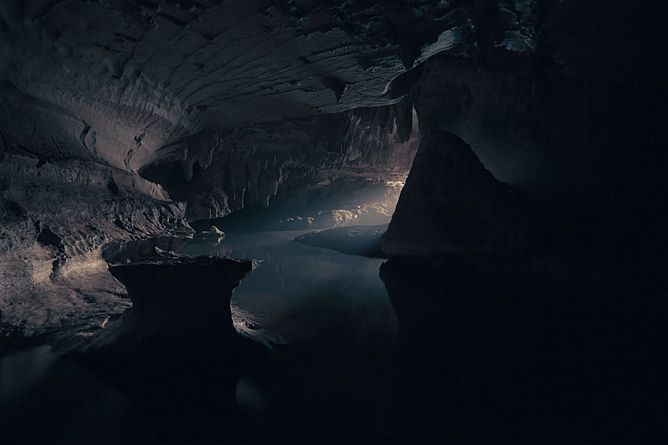
Waitomo Glowworm Caves (North Island)
Waitomo Glowworm Caves - Guided Tour
Waitomo is the most famous glow worm cave destination in New Zealand, and for many visitors it’s the place that first comes to mind. The main cave tour involves walking through impressive limestone chambers before finishing with a silent boat ride beneath thousands of glow worms on the cave ceiling.
The cave itself is large and dramatic, with cathedral-like formations that have been attracting visitors for over a century. The boat ride through the glow worm grotto is the highlight, where guides quietly pull the boat through the dark while the ceiling above glows like a starry sky.
What makes it different:
It’s the most iconic and polished glow worm experience in the country. The caves are extensive, the formations are spectacular, and the boat ride beneath the glow worms is something you won’t experience anywhere else in quite the same way.
The downside:
Because it’s so well known, it can feel busy at times and the experience is quite structured compared to smaller or more adventurous glow worm locations.
Worth it if:
You want to see one of New Zealand’s most famous natural attractions and experience the classic glow worm boat ride.
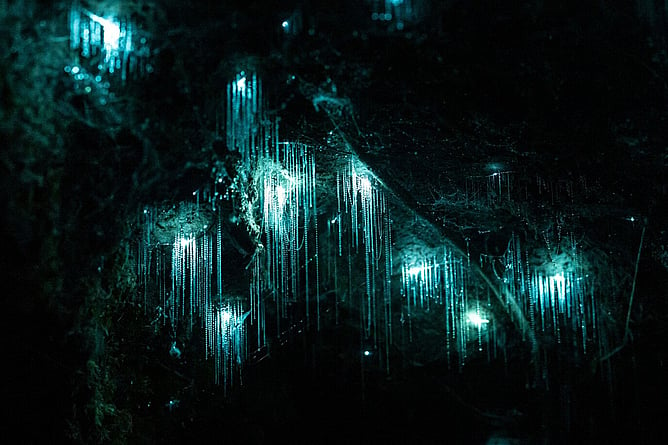
Taiao Adventures glow worm kayak tours, Rotorua (North Island)
Taiao Adventures Glow Worms Tours Rotorua - Guided Tour
This is the experience we guide - so yes, I’m a little biased - but it really is something special. It’s glow worms with a sense of adventure built in. No prior kayaking experience is required, and it’s very accessible for most travellers.
The tour begins right on the lake edge, paddling out into the dark. For many people, kayaking on the water at night is an adventure in itself. On clear nights the stargazing is incredible, and once you’re away from shore the quiet and stillness of the lake is unlike anything else.
From there we paddle along the shoreline to small caverns and rock formations at the water’s edge. As you drift inside, glow worms begin appearing on the cave walls and above the entrances. In some spots they surround you completely, reflecting softly across the water below.
What makes it different:
The mix of open water, stargazing, and glow worms in natural caverns along the lake edge. You’re moving through the landscape rather than visiting a single cave. It’s also fully guided, our team shares stories and fascinating facts about glow worms and the surrounding environment while quietly leading the group through the night.
The downside:
Tours start at dusk and run into the evening, so if you’re planning an early night or travelling with very young kids, it may not be the best match.
Worth it if:
You want something peaceful, immersive, and atmospheric - combining night kayaking, stargazing, and glow worms in their natural habitat.
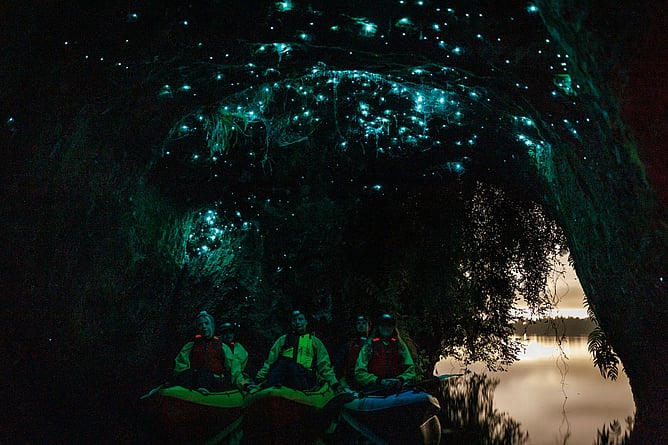
Te Anau Glowworm Caves (South Island)
Te Anau Glowworm Caves - Guided Tour
Located on the edge of Fiordland, these caves require a boat ride across Lake Te Anau to reach. Once there, you walk through the cave system, passing limestone formations and an underground waterfall, before taking a small boat through the glow worm grotto.
The glow worms here are impressive, but the overall experience is really about the journey - The boat ride across the lake, the cave formations, and the remote location. It also makes the tour feel more like a full outing, compared with some other glow worm experiences in New Zealand.
What makes it different:
It’s probably the most “expedition-like” glow worm attraction in the country. The journey is a big part of the experience, with the dramatic Fiordland landscape and the process of crossing the lake to reach something hidden and wild.
The downside:
Because it’s located in Fiordland, it’s not as easy to visit as some other glow worm locations in New Zealand. For many travellers, it requires a bit of extra travel unless you’re already exploring the southern part of the country.
Worth it if:
You want a full experience of Fiordland’s scenery and adventure, with glow worms as part of the journey.
So are all glow worm caves the same?
No. The glow worms are the same species, but the experiences are completely different.
If you’re deciding between glow worm locations in New Zealand, focus on the style of experience rather than the number of glow worms. Some places are easy and guided, others are physical and muddy, and some - like lake tours - are all about the atmosphere. Each offers something different, so it’s worth choosing the one that best matches your comfort level and the kind of adventure you’re looking for.
Noho ora mai (stay well),
Tom
Q: Are glow worm tours suitable for kids?
Most guided glow worm experiences in New Zealand are suitable for children, including places like the Te Anau Glowworm Caves and Kawiti Caves.
The minimum age for our Taiao Adventures glow worm kayak tours is 5 years old, and anyone under 16 must be accompanied by an adult. In some cases we can accommodate younger children, but this needs to be arranged in advance by contacting our team directly.
Self-guided glow worm caves such as Waipu Caves or Abbey Caves are not recommended for young children because the terrain is slippery, unmarked, and physically demanding.
Q: Do glow worms glow all year?
Yes. In New Zealand, glow worms produce light as part of their feeding process, so they glow throughout the year.
Brightness can vary depending on humidity, temperature, and food availability, but you can see glow worms in every season.
Q: What should I wear for glow worm caves?
Wear enclosed shoes with good grip and warm layers, because caves are cold even in summer.
For self-guided caves like Waipu Caves or Abbey Caves, choose clothing you do not mind getting muddy or wet. The cave floors are uneven, and you will often be walking through water.
Q: Do glow worms bite or sting?
No. Glow worms stay on the cave ceiling and are completely harmless to people.
Q: Are self-guided glow worm caves safe?
Self-guided caves are natural environments, so they come with risks. They are slippery, uneven, unmarked, and can flood after rainfall.
If you choose to visit a self-guided cave, go with someone experienced, bring a proper headlamp (not just a phone torch), wear sturdy shoes, and always check weather and safety conditions before entering. And ALWAYS tell someone where you are going and when you will be back.
Q: Do I need to book glow worm tours in advance?
Yes. Guided glow worm experiences often sell out, especially in summer or school holidays, so it is smart to book ahead.
Self-guided caves do not require bookings, but you should still plan your visit, check conditions, and make sure the cave is safe to enter before you go.
Q: Where is the best place to see glow worms in New Zealand?
The most famous location is the Waitomo Glowworm Caves, but there are many different glow worm experiences across the country. Some are traditional walking cave tours, while others explore glow worms in different ways. The best option depends on the type of experience you want.
If you're still unsure which experience to choose, it can be helpful to check recent traveller reviews before deciding. For example, you can read what visitors have said about the Taiao Adventures glow worm kayak tour in the Taiao Adventures Google Reviews ⭐️⭐️⭐️⭐️⭐️