The Bay of Plenty doesn't get enough credit as a kayaking destination. Everyone knows about Abel Tasman or Milford Sound, but this region - stretching from Whakatāne to Tauranga and inland to Rotorua - has some of the best and most varied kayaking in the country.
You've got sheltered lakes, coastal paddles, geothermal landscapes, island wildlife, and everything from gentle sunset tours to full-day expeditions. The water's generally calm, the scenery's diverse, and you're not fighting crowds like you would in some of the more famous spots down south.
I'm based in Rotorua, where we guide private steaming cliffs and glow worm kayak tours, but I've paddled most of the Bay of Plenty at some point - either for work, with friends, or just because I wanted to see what else was out there. Here's my complete breakdown of what's available.
Lake Rotorua and Lake Rotoiti paddles
Both lakes are good for casual paddling if you're comfortable renting a kayak and going out on your own. The water's generally calm, and the scenery's pleasant with lakefront houses, native bush, geothermal steam rising in places.
Lake Rotorua is larger and more developed. Lake Rotoiti is quieter and more natural. Both have rental operators near the shores and launch points that are easy to access.
They’re not guided, so you need basic kayaking skills and confidence navigating on your own.
Best for: Confident paddlers who want to explore at their own pace without a guide.
Coastal tours around Mount Maunganui and Tauranga
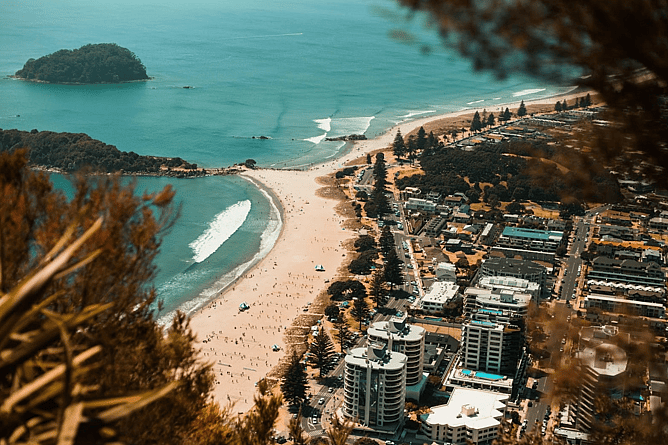
The coastline around Mount Maunganui has several operators offering guided tours along the beaches and around Moturiki Island (also called Leisure Island). The water's usually calm in the harbour, and you're paddling past volcanic rock formations, sandy beaches, and sometimes dolphins or seals (if you're lucky!).
Tours range from 1-3 hours - the shorter ones are good for beginners or families, and the longer ones cover more distance and sometimes include stops at secluded beaches.
The area's popular, so you're sharing the water with other groups, swimmers, and boats. Early morning tours are quieter and have better light for photos.
Best for: Beginners or families who want a gentle coastal paddle with some wildlife potential.
Whakatāne to Whale Island (Moutohora)
This is a longer, more serious paddle - about 9 kilometers each way from Whakatāne to Whale Island, an uninhabited wildlife sanctuary offshore. The crossing can be rough depending on conditions, and it's only suitable for experienced paddlers or guided tours with proper safety gear.
Whale Island itself is worth the effort - it's a predator-free reserve with nesting seabirds, dolphins, and occasionally whales passing through. You can't land without a permit, but paddling around the island and seeing the wildlife is the main draw.
Tours are weather-dependent and only run in good conditions. If you're not confident in open water or dealing with swell, skip this one.
Best for: Experienced kayakers who want a challenging open-water paddle and wildlife viewing.
Ōkere Falls and Kaituna River
This is whitewater kayaking, not sea or lake kayaking, so requires a completely different skillset and experience level.
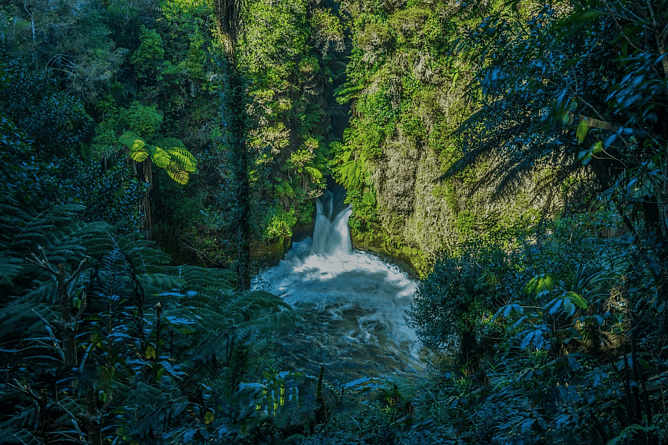
The Kaituna River near Rotorua is famous for having the highest commercially rafted waterfall in the world (7 meters), and experienced kayakers run it regularly. It's fast and technical, and definitely not something you do casually. There are guided options for people with some whitewater experience, but absolute beginners should stick to rafting tours instead.
If you're into whitewater and you've got the skills, it's one of the best runs in the North Island. If you've never done whitewater before, this probably isn't the place to start.
Best for: Experienced whitewater kayakers looking for a challenging river run.
Mayor Island (Tuhua) tours
Mayor Island is about 35 kilometres offshore from Tauranga - too far to kayak to, so these tours involve getting dropped off by boat and kayaking around the island itself.
The island's a marine reserve with clear water, rocky coastline, and good snorkelling. The kayaking is mostly coastal exploration, including paddling into coves, checking out rock formations, looking for fish and marine life.
It's a full-day trip and weather-dependent. If conditions are rough, tours get cancelled. But on a good day, it's one of the more scenic paddles in the Bay of Plenty.
Best for: Confident paddlers who want a full-day island adventure with snorkelling.
Thermal pools paddle (Lake Tarawera)
Lake Tarawera, about 20 minutes from Rotorua, has a unique feature - natural hot springs along the shoreline that you can only access by kayak or boat.
Some operators offer guided paddles across the lake to these hot pools, where you can stop, get out, and soak in naturally heated water right at the lake's edge. It's a novelty experience - not the most impressive hot pools you'll find in Rotorua, but the combination of paddling and soaking makes for a memorable day out.
The lake itself is scenic, dominated by Mount Tarawera, the volcano that erupted in 1886 and reshaped the landscape. The paddle is easy, the water's usually calm, and it's suitable for beginners.
Best for: People who want a gentle paddle with the novelty of soaking in natural hot springs.
Private geothermal kayaking (Rotorua)
This is what I do, so I’m hardly a neutral observer - but I genuinely believe this is unlike any other kayak experience in the Bay of Plenty (and all of New Zealand).
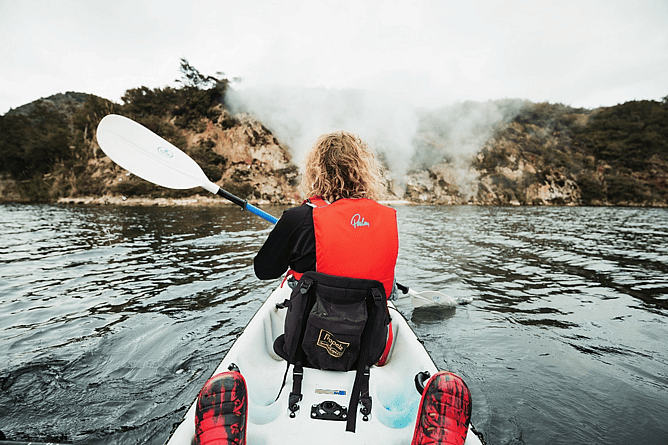
Waimangu is the world’s youngest geothermal system, born from the 1886 Tarawera eruption. The landscape still feels alive. Native bush clings to raw volcanic slopes. Mineral terraces reflect unique colours and textures. Steaming cliffs rise from the water’s edge. And Geysers shoot from the earth.
We hold exclusive access to paddle on Lake Rotomahana, a fully protected lake closed to public access. That means no motorboats, no passing traffic, and no other operators. Just your group, the water, and an untouched geothermal landscape.
This is a fully private experience - designed for solo travellers, couples, families or groups who value a luxury experience. Your time on the water unfolds at your pace. We linger where it’s captivating, move on when it feels right, and allow the landscape to set the tone. It’s a rare opportunity to experience one of New Zealand’s most extraordinary geothermal environments with complete privacy.
So if you want something that feels personal, immersive, and genuinely different, this is it.
Best for: Anyone who wants a calm, immersive geothermal trip that feels remote without actually being far from town.
Glow worm lake tours (Rotorua)
This isn’t just a kayak tour, it’s one of the most unique glow worm experiences in New Zealand.
Have you ever kayaked at night? Paddled beneath a sky full of stars? Crossed gentle lake waters in the dark to reach secluded coves only accessible by kayak, and then found yourself surrounded by thousands of glow worms?
That’s exactly what happens on our Glow Worm Kayak Tour, just 15 minutes from Rotorua Central.
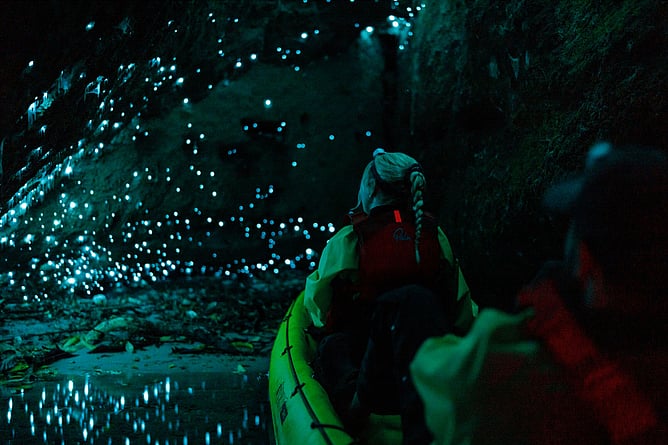
As darkness settles, we guide you across calm water and into hidden shoreline caves where glow worms illuminate the rock walls and native bush above. Their reflections shimmer across the still lake, creating a canopy of light above and below. From water level, the experience is immersive, peaceful, and completely unforgettable.
Every time I guide this tour, I see people pause, take a deep breath, and just be completely captivated by the glow worms. That moment of quiet wonder is why I love this tour so much.
No prior kayaking experience is needed. We have stable, easy-to-paddle kayaks and take the tour at a relaxed pace. This is absolutely one of the most accessible and memorable evening activities in Rotorua, Bay of Plenty, North Island, New Zealand.
Best for: People who want a calm, one-of-a-kind glow worm encounter, with kayaking as the way to reach it rather than the main event.
Your best pick for kayaking in the Bay of Plenty
The Bay of Plenty has kayaking to match almost any type of traveller - calm lakes, rugged coastlines, offshore islands, and even whitewater if you want it. Plus, everything is within close proximity, so you can go from a quiet lake paddle to a coastal trip or a geothermal shoreline in the space of a weekend.
The best choice comes down to your confidence, the kind of scenery you want, and whether you’re chasing something relaxing or something that pushes you a bit. The good news is that whatever you pick, you’ll end up somewhere beautiful. And once you’ve paddled here - especially at dusk or sunrise - it becomes pretty obvious that the Bay of Plenty deserves far more recognition as one of New Zealand’s top kayaking regions (though for now, the secret can stay between us).
Noho ora mai (stay well),
Tom
Do I need kayaking experience to join a tour?
Not usually. Most guided kayak tours in the Bay of Plenty are designed for complete beginners and use stable, easy-to-handle double kayaks. If a tour requires previous experience, it will be clearly stated by the operator.
What should I wear when kayaking?
Wear light, quick-drying clothing, a windproof or waterproof layer, and shoes you do not mind getting wet. Avoid heavy cotton because it stays cold and damp. If you are joining an evening or night tour, bring warm layers underneath your splash gear.
Do I need to know how to swim?
Always check with your tour provider if you’re unsure. Taiao Adventures tours do not require swimming experience and provide all necessary safety gear.
What should I bring on a kayaking tour?
Bring a water bottle, sunscreen for daytime tours, a hat, warm layers for evening tours, and a dry bag if you want to take your phone. Most operators supply all essential kayaking equipment including the kayak, paddle, buoyancy aid, and splash gear.
Are sunset or night kayak tours safe?
Yes. Reputable operators run night tours with proper lighting, safety equipment, communication devices, and trained guides. The kayaks used are stable and night conditions on lakes are generally calm. Night tours feel adventurous but remain very safe under guided supervision.
What happens if the weather changes?
Kayak tours run only in safe conditions. If wind or swell picks up, your guide may adjust the route or cancel the trip altogether. You’ll usually be rebooked or refunded.
Are kayaks stable? Can they tip?
Before launching, your guide will show you how to sit, balance, and paddle properly to keep the kayak steady. But yes there is always a possibility you may tip your kayak.
Can kids go kayaking?
Yes. Many lake and coastal tours are suitable for families. Age limits vary by operator. Many accept children from eight years old and some accept children from twelve. At Taiao Adventures, the minimum age for glow worm kayaking is five years old and anyone under sixteen must be accompanied by an adult over eighteen.
Do I need to be fit?
Most tours are beginner-level, run at a relaxed pace, and use a double kayaks to share the paddling. Always check with your operator as some tours may require more physical activity than others.
Is kayaking safe for solo travellers?
Absolutely. Guided kayak tours are perfect for solo travellers - you’re warmly welcomed into a small group, with a guide nearby, and all equipment and safety is handled for you.
How long do kayak tours usually last?
Most guided kayak tours range from 1-5 hours.
Can I book a kayak tour at the last minute?
Sometimes, but popular tours definitely fill up quickly. Booking ahead is always the best option.