Rotorua sits on top of one of the most active geothermal fields in the world, which means there's bubbling mud, steaming vents, and hot springs almost everywhere you look. And I promise it’s unlike anything you’ll have seen before - you simply can’t come to Rotorua and miss it.
You've got several geothermal parks to choose from here, each with their own take on the landscape. I've been to all of them multiple times, either on my own or tagging along with friends and family who are visiting. So here's my breakdown of what each park actually offers and who they're worth visiting for.
Te Puia
This is the big one - the most well-known geothermal park in Rotorua, and for good reason.
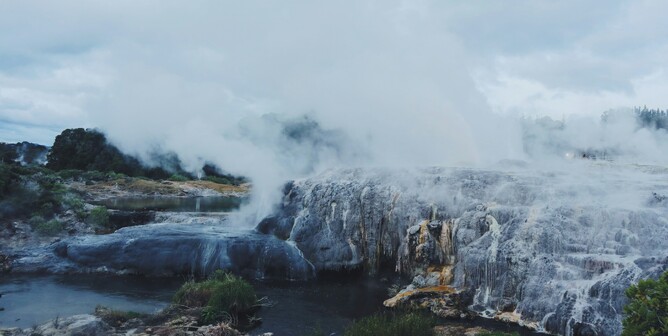
Te Puia has Pōhutu, the largest active geyser in the Southern Hemisphere. It erupts multiple times a day, shooting water up to 30 meters high. The park also has bubbling mud pools, silica terraces, and a kiwi house where you can see New Zealand's national bird in a nocturnal enclosure.
The cultural component is what sets Te Puia apart from other parks. It's located on the grounds of the New Zealand Māori Arts and Crafts Institute, so you can watch carvers and weavers at work, and there are cultural performances throughout the day that explain the connection between Te Arawa iwi and this geothermal landscape.
Another advantage is its location. Te Puia sits right in central Rotorua, so you don’t have to carve out extra travel time or commit to a long drive. If you want a major geothermal experience that fits easily into a busy day of activities, this is the most convenient option.
It is one of the more expensive options, but all things considered, if you're only going to visit one park and you want the full experience, this is the one.
Best for: First-time visitors who want geothermal features and cultural context together.
Whakarewarewa - The Living Māori Village
This is different from the other parks because it's an actual village where people live, and they have been for generations, using the steam vents to cook kai (food) and the hot pools for bathing.
You can tour the village with a guide who explains how the geothermal features are used in daily life, and you see geysers, mud pools, and boiling pools throughout the village. There's also a cultural performance and a hangi (traditional earth oven) cooking demonstration.
It's smaller and less polished than other geothermal parks, but it’s much more authentic, as you're seeing how people actually live. And again, this one’s right in town, so it’s easy to work into your day.
Best for: People interested in the cultural and human side of Rotorua's geothermal activity, not just the natural geothermal activity.
Wai-o-Tapu
This is the most visually striking of all the parks. The Champagne Pool - a massive hot spring with orange and green edges and steam rising off bright blue water - is beyond beautiful.
The park is laid out as a walking circuit that takes about an hour to complete at a relaxed pace. It's well-maintained, easy to navigate, and great for families or anyone who prefers a clear, structured path.
The Lady Knox Geyser erupts daily at 10:15am (it's manually triggered, which some people find disappointing, but it's still a phenomenal show). Get there early if you want to see it - the eruption attracts crowds.
Wai-O-Tapu is about 30 minutes south of Rotorua, so factor in drive time. But if you want the most photogenic geothermal landscape, this is it.
Best for: People who want dramatic, colorful scenery and don't mind a short drive out of town.
Hell’s Gate
Hell’s Gate is the most intense of the geothermal parks. It has the largest hot waterfall in the Southern Hemisphere, violently boiling mud pools, and some pretty otherworldly landscapes.
It's also a little bit smaller and can be walked in about 45 minutes. One of the most memorable parts is the mud bath and sulphur spa on site - something you won't find anywhere else. As you sink in, the mud supports your body, gently exfoliates your skin, and warms you right through. It’s strangely calming and a little playful at the same time. Afterwards, you move into the sulphur spas, where mineral-rich water smooths the skin and leaves you feeling like you’ve had an unexpected mini spa day.
Best for: People who want intense geothermal activity and the option to soak in mud baths afterward.
Kuirau Park
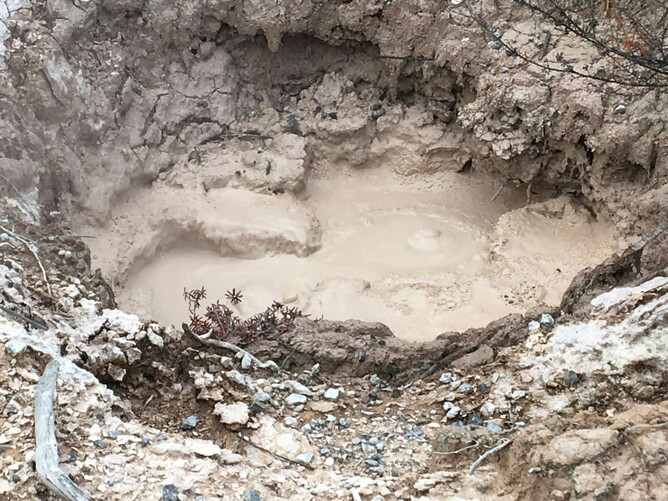
This is the free option, right in the middle of Rotorua. It's a public park with bubbling mud pools, steam vents, and hot footbaths scattered throughout.
It’s not as dramatic or structured as the paid parks, but that’s part of its charm. Kuirau Park shows geothermal activity as part of everyday life here. Steam rises beside footpaths, mud pools bubble away just metres from quiet suburban streets, and locals pass through on their daily routines. It’s Rotorua’s geothermal landscape in its most natural, unfiltered form.
If you’re here on a Saturday morning, the weekly markets set up right beside the park, which makes it an easy add-on for families or anyone wanting another local experience.
On any day, the playground and hot footbaths make it great for spending an hour with kids, but do keep an eye on younger ones near the thermal areas, as the ground can be hot or unstable in places.
Best for: Budget travellers or families who want a quick, free geothermal experience in town without committing to a full park visit.
Waimangu
Waimangu is the world’s youngest geothermal system, created by the 1886 eruption of Mount Tarawera and you can feel that raw geological energy everywhere you go.
The valley is enormous compared to the other parks. Instead of standalone features, Waimangu is an entire geothermal ecosystem, and as you walk through, you’ll see a vast volcanic valley with steaming cliffs, crater lakes, terraces, and geothermal streams flowing through native bush.
Waimangu is also the only geothermal park connected to a major lake created entirely by volcanic eruption (Lake Rotomahana). The walking tracks range from easy to moderate, and buses run back up the valley so you can walk at your own pace.
It takes about 1.5–2 hours to explore, and because it’s so expansive, it never feels crowded, making it ideal for anyone who wants to spend time in the landscape, rather than just observing it.
Waimangu also offers something very few geothermal areas in New Zealand can - the chance to experience it from the water - and we’re proud to bring this to you.
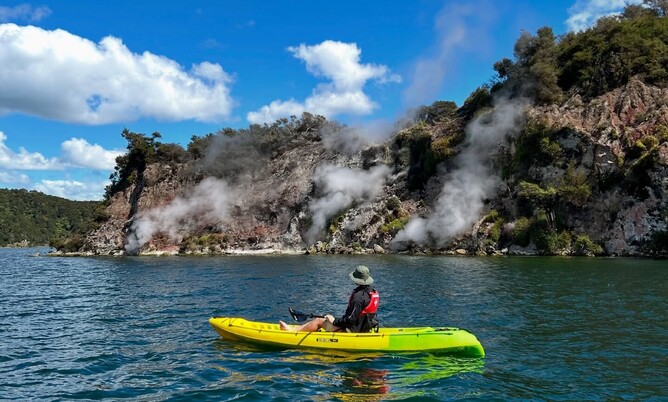
On our Steaming Cliffs Kayak Tour, we take small groups out across the water to see a side of Waimangu you simply can’t reach on foot (and we’re the only operators with access to kayak on the lake, so it’s a perspective you simply can’t get elsewhere). The lake is calm and quiet, and because motorised boats aren’t allowed, it stays peaceful throughout the day.
As you paddle, you’ll move past steaming cliffs, hidden vents, and sections of shoreline where geothermal water pours straight into the lake. Steam drifts across the surface, native bush hangs over the edges, and the whole area feels untouched and protected. It’s a gentle, steady paddle suitable for beginners, with plenty of time to stop, look around, and take in the atmosphere.
It’s a completely different way to experience Rotorua’s geothermal landscape, and far more immersive than standing on a viewing platform.
Choosing the right experience
You don’t need to visit all of these - just pick one or two based on what you’re genuinely curious about. Each park offers something different, and the best choice really comes down to the kind of experience you want, whether that’s bold colours, cultural context, raw power, or just a quiet wander through the steam.
No matter which one you pick, you’ll walk away with a real sense of Rotorua’s personality. The geothermal landscape is immersive - it’s something you feel under your feet, in the air, and sometimes even in the sulphur smell that follows you home. Choose the park that speaks to you, take your time with it, and let the place work its magic.
Noho ora mai (stay well),
Tom
Q: Do Rotorua's geothermal parks smell bad?
A: Rotorua’s geothermal parks - including Te Puia, Wai-O-Tapu, Hell’s Gate, and Kuirau Park - all have a distinct sulphur smell. Some people barely notice it, while others take a bit of time to adjust. It’s completely normal and not harmful.
Q: Are the geothermal parks safe for kids?
A: Yes - as long as you follow the rules and keep a close eye on them. The main geothermal parks in Rotorua are well-managed, with marked tracks, boardwalks, and clear safety signage. Stick to the paths, don’t let kids run or climb near fences, and hold hands with younger ones around any open thermal areas. With normal supervision and a quick safety chat beforehand (“we stay on the tracks, we don’t touch the water or mud”), the parks are safe and really memorable for kids.
Q: Do I need to book Rotorua’s geothermal parks in advance?
A: Te Puia and Hell’s Gate are best booked ahead in busy periods. Wai-O-Tapu and Whakarewarewa often have space but it doesn’t hurt to pre-book, and we definitely recommend booking our private Waimangu Steaming Cliffs Kayak Tour in advance! Kuirau Park requires no booking.
Q: What should I wear to Rotorua’s geothermal parks?
A: Wear comfortable walking shoes and light layers. Geothermal areas can shift from warm to cool quickly depending on steam and wind. Expect your clothes to pick up a mild sulphur scent - it’s normal and fades after washing.
Q: Can I do more than one park in a day?
A: Yes. Many visitors to Rotorua pair Te Puia with Kuirau Park, or Wai-O-Tapu with Hell’s Gate. Just remember that each park involves a fair amount of walking, so give yourself enough time to explore without rushing.
Q: Can I touch the water or mud at Rotorua's geothermal parks?
A: No. Even pools that look calm or shallow can be boiling hot and cause severe burns. All geothermal water and mud should be treated as dangerous - admire from a safe distance.
Q: How long does a geothermal park visit usually take?
A: Most geothermal parks in Rotorua take between 45 minutes and 2 hours to walk through, depending on the size of the park and how often you stop for photos or to watch an eruption.
Q: Is it okay to bring food into Rotorua's geothermal parks?
A: Light snacks are fine at many parks (though not all), but most parks discourage eating inside active geothermal zones for safety reasons. Picnic areas are typically located near the entrances or in designated visitor spaces.